The Supportive / Our First Customers:
MacSparky
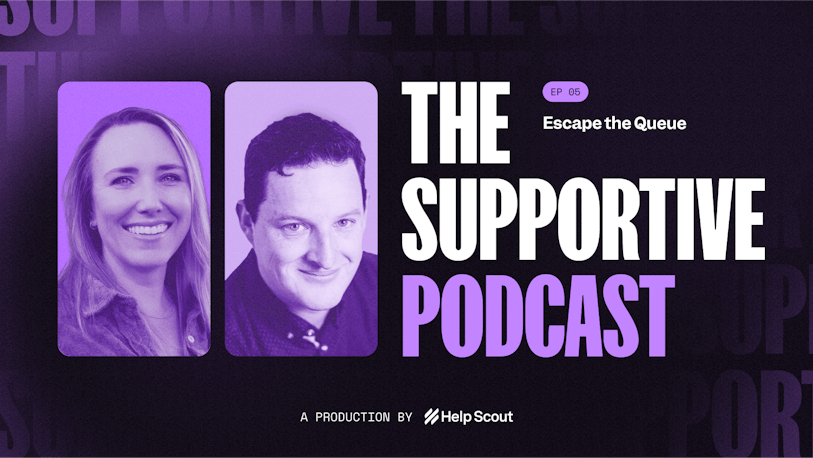
Mat sits down with David Sparks — lawyer turned full-time creator — as he shares how 28 years in the courtroom shaped his approach to serving his technology audience. From playing imaginary clown music at raging opposing counsel, to personally answering emails from 93-year-old customers, David reveals what it looks like to build a business around kindness, craft, and staying close to the people you serve.
Episode notes
Is kindness the secret weapon for support teams, even in the digital age? In this episode, Mat meets meet David Sparks – former trial lawyer, tech educator, and founder of MacSparky.com – to talk fulfilment and sustainable success in customer support.
From tales of “donkey work” at RadioShack to helping customers worldwide as a solo online business, David shares honest reflections about what really matters: intentional kindness, clear boundaries with technology, and picking the right work to automate and which connections to hold onto.
Listen out for:
(00:00) Judging books by covers, "donkey work," and the customer database dilemma
(01:48) Early customer support lessons at RadioShack
(04:13) Why personal values matter in career choices
(10:05) The reality of customer loyalty when closing a legal practice
(13:31) Building a kind support audience and repelling “aggressive people”
(15:11) Craftsmanship, automation, and finding the right AI balance in support
(17:40) Staying hands-on: The value and challenge of handling your own support
(19:50) “Enshittification,” short-term thinking, and maintaining product quality
(21:22) Building a support “team” as a one-person business
(24:13) The tension between growth, sustainability, and product focus
(26:21) How AI changes the game for support and customer relationships
(28:35) Finding meaning in customer stories: from time-saving tips to 93-year-old fans
(31:16) The timeless key to productivity and a fulfilling career
3 key learnings:
Lead with Intentional Kindness: David’s experience both in the courtroom and online shows that genuine kindness isn’t weakness. It shapes the customer audience you attract, diffuses conflict, and fosters loyalty. As he puts it, “solve for kindness; repel the icky stuff”.
Automate the Right Things, Stay Human Where it Matters: AI and automation can free you from tedious grunt work (“donkey work”), but the human connection, especially in thoughtful customer communication, remains a competitive advantage. Know where to delegate and where to add your personal touch.
Focus on What’s Most Important For You and Your Customer: Whether setting boundaries on business growth, designing support processes, or helping a customer get home faster to their daughter, David reminds us that doing “the important thing” leads to long-term happiness and success in support, business, and life.
Links from this episode:
Books recommended:
Relevant Help Scout articles
Mat Patterson [00:00:00]: They say you should never judge a book by its cover, but what about its title? Imagine browsing the shelves and your eyes land on a book titled Introducing the Medieval Ass. What would you expect to find between those— covers? Perhaps a saucy collection of buttock-forward medieval art featuring 13th-century Kim Kardashians? Or maybe a film tie-in re-release of The Miller's Tale? Well, you'd be wrong. It's a proper academic work about donkeys and their socio-economic and cultural significance. Get your mind out of the gutter.
David Sparks [00:00:31]: Man, I hate the donkey work.
Mat Patterson [00:00:33]: That's today's guest, and we'll meet him very soon. But the idea of donkey work goes right back in some form to that medieval period. It stands for gruelling, demanding, unattractive labour. And it's a phrase you'll hear a few times in today's episode, which stars David Sparks, a former lawyer turned tech teacher. We'll hear how he thinks about supporting his customers, what he learned from legal practice, and how he sees AI changing his work.
David Sparks [00:00:57]: You know, I complain about the donkey part of it.
Mat Patterson [00:01:00]: Yes, and also about donkey work. I'm Mat Patterson. This is The Supportive.
David Sparks [00:01:08]: My name is David Sparks. I am at macsparky.com where I talk about technology and productivity, and I've been doing it forever.
Mat Patterson [00:01:16]: Forever means about 20 years, which is basically the same thing on the internet. I've read and listened to and watched David's work for most of that time. I'm a paying customer of some of his products. But we started out by going much further back, to David's very first job at the now-defunct Radio Shack, a store which I am now adding to my list of companies with names that must have immediately become a burden when technology changed. Carphone Warehouse. It seems David got a very early customer service lesson about the tension between marketing and support.
David Sparks [00:01:48]: It was the early days of computers. When I was a kid, before I got a job there, I would go there on my 10-speed and program the old Tandy computers. That's how I learned how to program. So I have a lot of affection towards the company, but they had a system in place back— this is back in like the '80s, the early '80s, where you got every customer that came in, whether they bought a $10,000 computer or a 50-cent fuse, you had a little paper and you had to write down their name and address. And I'm sure they made a ton of money off that mailing list, but you were, as an employee, if you didn't hit like 90% of those things, they got pissed. And you know, you would, you could lose your job over it. And I hated it. I hated that so much because every customer knew it, every customer hated it.
David Sparks [00:02:36]: And, uh, that I got to a point where sometimes I would just write in the names of strangers. Because I just couldn't, I just couldn't deal with asking another person to do that.
Mat Patterson [00:02:47]: Of course, Radio Shack wanted to be able to contact their customers. That makes sense. But obtaining that information wasn't free. There was a cost, and it probably never shows up in the reporting of an ever-larger contact database. It's not a monetary cost. Well, not directly. It's a cost in employee morale and in customer experience. How many of those people genuinely wanted to be added to that list? How does that compare to the number who found it an irritating intrusion on an otherwise helpful transaction? And by forcing your staff to do it, you're incentivising them, like David, to just make stuff up.
Mat Patterson [00:03:25]: But talking to David, it seemed to me that his approach to customer support, which we will get into in more detail, it's not separated from his approach to life in general. It's an attitude of intentional kindness, something perhaps you wouldn't expect from a man who spent decades as a trial lawyer. But law was never David's original plan.
David Sparks [00:03:46]: I started aerospace engineering. I wanted to, you know, make rocket ships and planes and read all the books. I was super into it. And at the time, it was kind of like the Reagan boom of defense spending. But I just— like, the professors I had were— they would brag about, like, you know, the stuff they were doing. Just was not interesting to me. You know, a nuclear bomb the size of a kumquat.
Mat Patterson [00:04:13]: It's like the punchline to a joke. Which small orange fruit should you never squeeze?
David Sparks [00:04:18]: A nuclear bomb the size of a kumquat.
Mat Patterson [00:04:22]: Ehh... Back to David.
David Sparks [00:04:23]: I just don't want to spend my life making that stuff. But at the same time, I joined the debate team at my university because I thought that, you know, engineers are so inarticulate that if I could I could put a few sentences together. Once I got a career started, it would give me some kind of legs. But I was just like cleaning up. At one point, I think I was rated like second in the nation for the type of debate I did. And I went to a tournament, and there was a federal judge who was one of the judges, which was kind of unusual because collegiate debate is not really like, you know, courtrooms. But the guy took me to dinner, and he says, you should go to law school. And like, I never even thought of it.
David Sparks [00:05:01]: You know, I came from a very modest family, you know, and like, you know, law was up in the stratosphere. It wasn't something that people like us did. But then it got me thinking, and so I changed my major and, you know, shined my shoes, went off to law school.
Mat Patterson [00:05:20]: It was a dinner that led David to becoming a lawyer, but a lunch with his father that nearly prevented it.
David Sparks [00:05:26]: My dad, very blue-collar dad, took me to lunch when I said, okay, I want to do this. And I remember we went to Denny's. He's like, Dave, I'm worried about you with this career. I'm worried that it's going to compromise your soul, you know? And he was not kidding because it was towards the end of his life. And I knew how serious he took it. But I also really appreciated that he was worried about that. And it really gave me a compass. I think throughout my career that like, I'm not going to let my dad down.
David Sparks [00:05:57]: And when you're a lawyer, there are opportunities to do the wrong thing. And I like to say I walked the straight path.
Mat Patterson [00:06:04]: David knew who he was as a lawyer, unlike some.
Cat Lawyer [00:06:08]: I'm here live. I'm not a cat.
Mat Patterson [00:06:09]: He chose his first legal firm because all the big firms that he interviewed with were only concerned about how many billable hours he could generate.
David Sparks [00:06:18]: They would say, hey, we want to hire you. We want 2,000 hours a year. Everything was some integer followed by hours because they just want all those billable hours. And these little guys, I've been doing research for them through law school just to earn extra money. And so they said, well, you should interview with us. I thought— never even thought they would be hiring because it was like 2 lawyers. And at the end I said, well, what do you expect of me? And I was waiting for the hours, right? And they said, well, we expect you to win, you know. And I'm like, okay, this is where I need to work.
Mat Patterson [00:06:50]: Yes, I think a lot of Support people have the same experience where you're just judged by how many tickets do you get through.
Mat Patterson [00:06:58]: Present-day Mat here with a bonus book recommendation: The Tyranny of Metrics. Look it up if you're in support or marketing. But as a trial lawyer, David was no Sylvester Stallone.
David Sparks [00:07:10]: I mean, talking about marketing, there's like a whole racket to law where you sell yourself to the client as this like hyper-aggressive, like Rambo guy. Who are you? Your worst nightmare. And some people just love that. And the problem is those guys, the bills just go through the roof because they do a bunch of stupid stuff to look, you know, to look strong. And the funny— and the irony of it is, because that was never my take, it was never the people I worked with, we didn't accept clients like that. But the, um, but, you know, actually trying cases, the Rambo guys were the first ones to go down. I mean, if you had a case against a trial attorney who came in the first day and said, hey, my name is Joe, nice to meet you. Hey, I know, you know, you have family, I have a family.
David Sparks [00:08:01]: If we need to do something, like you have a kid's birthday, let me know. We'll work around it. We won't be hard, you know. And you'd look, watch a guy walk out of the room and be like, damn, the jury's gonna love that guy. And that was the case. I mean, You know, the nice guy, honestly, in trial law is so often the winner. That was my experience.
Mat Patterson [00:08:22]: Well, that's not what legal dramas have taught me on television, but I guess I'll believe an actual lawyer. In a blog post, David wrote once that for some guys who were maybe having a bit of a tantrum in court, he'd just imagine clown music playing.
David Sparks [00:08:35]: Yeah, I actually did. In my head, I had a soundtrack that I'd play when they just started going off. I'd hear it in the back of my head. I still do that. Like, when I see somebody throwing a fit, it's just a way for me to kind of put it in perspective. But like, for a jury trial attorney, when you do that, you're just sinking yourself.
Mat Patterson [00:08:53]: That might be a little something you can use for customers who are rude and aggressive with your team. Maybe a nice little help desk automation to detect those people and automatically play a little bit of this. During much of his legal career, David had been writing about tech on the side, but he'd never really thought about making it his full-time gig.
David Sparks [00:09:12]: It was kind of a surprise to me, honestly. I did it for fun and just to, to like exercise a different muscle, you know, and, and it kind of took off more than I expected it to. And then I started making money on it. So for many years I was doing both at once, and then, you know, you just get to a point where you got to like choose one.
Mat Patterson [00:09:33]: And had you just got yourself into a position where that was a feasible option?
David Sparks [00:09:36]: Yeah, Exactly. I did not, in my career transition, it was not a risk. Like I was making enough money as MacSparky that I'd be okay. Giving up the lawyer income hurt for sure, but I was looking at how much I was making. If I don't make a penny more, that's still enough, we'll be okay. And you know, because I got focused on one thing, I did better.
Mat Patterson [00:09:59]: Transitioning to full-time as MacSparky meant finding other lawyers for his legal clients.
David Sparks [00:10:05]: I was very careful about picking new lawyers for them that I thought would be a good fit for them. And I spent a lot of time kind of making sure I handed it off right. I remember like one client who like, they were going to foreclose on his building. I drove to the bank. I talked them out of it. You know, it's just like, I really pulled some jujitsu moves to save his business. And when I told them I was hanging it up, He's like, okay, well, who should I go to next? You know, and I said, this guy, you know, he's like, okay. And he said, I bet he costs more than you.
David Sparks [00:10:38]: You were always cheap, you know? And I was just like, geez, you know, I guess I didn't charge enough, you know? But it's like, you know, it's like, you know, at the end I thought there'd be a little more loyalty or, you know, whatever. But, you know, you realize as a professional, for a lot of people you're just a cog. Yeah.
Mat Patterson [00:10:54]: In a previous episode of this series, I spoke to someone who runs a brewery Yeah.
Mat Patterson [00:11:00]: He said, yeah, we just remind ourselves no one is dying on the operating table here.
Mat Patterson [00:11:04]: We're just making beer.
David Sparks [00:11:05]: Exactly.
Mat Patterson [00:11:06]: Fine.
David Sparks [00:11:06]: Exactly. You know, and I didn't deal with patients on the operating table, but their financial, like, and sometimes multigenerational businesses and everything was contingent on me, like, delivering the goods. And, you know, that comes with a certain degree of stress.
Mat Patterson [00:11:23]: And maybe being an online teacher of tech and productivity isn't quite as high stakes, But when you build your own audience, you do tend to attract people with similar perspectives.
David Sparks [00:11:31]: I am very fortunate. My customers are just the nicest people, and rarely does somebody get frustrated. And when they do, it's not because of, like, some underlying animus. It's because of a misunderstanding. And, uh, and what I always like to do is when they do that is I, I write them back a thoughtful response and explain. And say, okay, I understand why you thought that. Like, I had somebody write me and said, I'm gonna quit because you just give me one podcast a week and I don't feel like I'm getting enough value, and blah, blah, blah. And I thought, well, that's not right because I give away one podcast plus one video plus these live meetups.
David Sparks [00:12:10]: So I went through the last month and I, I wrote him an email and said, hey, this is all the stuff I gave you last month. It sounds like you're not seeing any of it. What's the— you know, let's, let's make sure you've got like hooked into the right things. And then, and he's like, sure enough, he wasn't. So he was only seeing one of the, like, 3 things he gets a week. And then he was very happy at the end. He's like, oh, okay, well, I just didn't realize, you know. And then they get a little sheepish because they're a little embarrassed, you know.
David Sparks [00:12:37]: It's so easy, I think, to write an email off to the internet and be just kind of a jerk. And, uh, and I try to deal with those carefully.
Mat Patterson [00:12:47]: You've got this quite nice audience. How much of that do you think is you have created the type of audience that you wanted to serve?
David Sparks [00:12:54]: Yeah, I have always tried to, to like solve for kindness in the personal relationships, and I think repel like the, the icky stuff. So I— my personality repels aggressive people, you know, which is kind of funny, me being a former triathlete, but even then, my racket is a trial lawyer was not to be a jerk. And so I've heard, you know, people who, uh, who don't want my— what I'm selling because they think I'm too squishy, you know. So that's okay. I do think that whatever you're selling— like, what I'm selling is information about how to use all this tech and be more productive. But like, one of my biggest products is based on a quote from Aristotle. It's, you know, 2,500 years old. Like nothing I'm doing is new.
David Sparks [00:13:43]: If someone doesn't like me or my personality, they'll probably go find somewhere else on the internet that they can learn about that stuff. So just lean into who you are.
Mat Patterson [00:13:53]: Citing precedent like a good lawyer should, he's referring to his Productivity Guide, which is one of a series of video-first courses that David sells online at MacSparky.com.
David Sparks [00:14:03]: What I was doing is I had a podcast that's, that's successful, but podcasts, you don't make a lot of money off podcasts. It's more of a Like, to me, it's my big funnel. It's where people find me, and, you know, hopefully they enjoy what I share, and if they enjoy it, maybe they're willing to come buy something that I make once in a while. So I was doing these things called the Field Guides, which itself was an evolution. I started writing books for Wiley Press, and it was called iPad at Work and Mac at Work, and I had pitched them on the idea of field guides, and they're like, ah, that— I don't think that works, you know, like Okay, and that's the greatest thing ever happened is they didn't take me up on it, you know. And then after I did a couple of those, I thought, well, you know, I'm— it's my audience and I'm getting like 10%, you know. So I'm like, this is silly. So I went and did my own and they were ebooks for a long time.
David Sparks [00:14:52]: And then I realized videos are really what I need to be teaching with because the kind of stuff I teach, you need to look over my shoulder and see what I'm doing.
Mat Patterson [00:14:58]: I've gone through some of David's courses. They are all very well crafted. And in fact, craft is something that I had read David mention before. So I asked him whether craftsmanship was something that he tried to bring into his customer service too.
David Sparks [00:15:11]: I try to, like right now the big question is AI, right? You know, 'cause you can automate a lot of this stuff and I'm exploring around the edges of that. Like I, something that just repels me is the customer service, what I call the donkey work. You know, it's like somebody needs to reset a password and like, logging into the website, finding the customer account, pushing the right button. It's like, that just kills me because I love making stuff, and that just kills me, you know. And, um, like, writing them back is no problem. I, I have a little microphone, I dictate my email, I can blast through it so fast. But the actual grunt work of resetting the password— and it's so much so that I was a little slow on it, frankly. My customer support was not isn't as fast as it should be.
David Sparks [00:16:01]: So that's something that I'm really exploring, but the, the exploration of it is, can I teach the AI to reliably reset a password for me? But I don't want it to write the email back. I want to do that myself. So it's like finding those lines.
Mat Patterson [00:16:17]: So even as, for the most part, a one-man company, David is having the same AI in support discussion that so many of us are having in our larger teams. And with a level of nuance that perhaps people further up the chain sometimes lack. AI can most definitely not do every part of customer support unless you're willing to lose all your customers. But there are parts of the job that really are just busywork where some smart automation could make everybody happier, customers included. But David clearly wants to talk to his audience about more important things.
David Sparks [00:16:49]: Yes, exactly. I want the connection. In fact, you know, I I'm successful enough I could hire someone to just do the customer support email for me, but it's, it's in a weird spot because there's not enough of it. It's like, are you gonna train somebody all the stuff you need to do for that? It doesn't really make sense. But like, if I can make the robot go do the background part while I'm crafting a nice email, that's nice. The other advantage for me is the business owners, I am at the front end of problems. So like the guy who had the issue with he couldn't see his other content, I actually made some structural change so everybody in that level can get a better idea of what their content is. And if I had had somebody do that for me, first of all, I don't think they would have been as thoughtful in their reply, and they definitely would— the message would have not got to me that that problem existed.
Mat Patterson [00:17:40]: This, of course, is a challenge that most support teams have been working on for years. As the volume grows, How do you make sure that the decision makers at the top stay informed and stay engaged with what customers are experiencing? Maybe it's all-hands support sessions, regular queue time. Ultimately, it's a problem that support leaders should be addressing themselves because the CEO who really sees the customer pain is the one who's more likely to do what it takes to fix the problems. We've got some good resources for you on that. I will link them up in the show notes. David, of course, can fix any problem that he notices for himself, and that matters to him.
David Sparks [00:18:17]: I think I'm very fortunate in that I'm the boss, so I can, I can make the decisions. My heart goes out to people doing customer support where the boss is not being, you know, progressive in their thoughts. And, um, and I, I honestly believe that the best thing you can do for your business is treat your customers right. And, uh, I don't know how you communicate that up the ladder, but if you're dealing with that, I feel you.
Mat Patterson [00:18:44]: And people will appreciate it. Do you think that there are some bosses who they just don't have that attitude and therefore it doesn't matter what you do, they're not going to be convinced?
David Sparks [00:18:53]: Yeah, you know, the worst thing in business in my opinion is a sharp pencil guy. You know, the guys who come in and they want to like optimize for the nickel. And there's a lot of ways that they, in fact, Seth Godin just wrote a post on this a few days ago. I'll send you a link to it. And he called it optimizations. Like, you can optimize for the best customer experience, you can optimize for the best product, or you can optimize for short-term profit. And that is the bane of so many companies. And you see it in big companies too.
David Sparks [00:19:28]: Can I say enshittification on your show? Is that all right? There's this term in the nerd community, "enshittification." I don't think it really made it to the mainstream yet, but it's the idea of, like, you've got a product that's good, but then you just start turning the dial on profit, just little increments.
Mat Patterson [00:19:44]: "Enshittification" is a nonfiction book by Corey Doctorow, another one I recommend.
David Sparks [00:19:50]: And you don't realize it's kind of like the boiling frog, and then one day you realize, "Oh yeah, this product is shit now," you know? Because it was enshittified by somebody with a sharp pencil. And I'm sure customer support deals with that, but you see it in big companies too. It just happens across the board. In the US, the companies have to report their earnings every 90 days, and the big thing is how can we make more money now than we did 90 days ago, even if it's completely successful. It's just kind of nuts. When as a lawyer, I would tell my clients never to take their companies public, because it felt like you then you got on a treadmill you could never get off.
Mat Patterson [00:20:28]: Yes. And we're all working in a system which incentivizes short-term behaviors.
David Sparks [00:20:34]: Yeah. Yeah.
Mat Patterson [00:20:36]: Yeah.
Mat Patterson [00:20:36]: That's the opposite of what you need in customer support, I think, because very often great support does not pay off today. It pays off 5 years from now.
David Sparks [00:20:46]: Yeah. Well, and that's why I try to make the decisions in my business to the extent you can call it a business, I try to make them on the long-term basis. Like, if I'm choosing between this and this, what makes it more likely I can keep doing this for another 12 years? You know, that's kind of the question that's always going through my head.
Mat Patterson [00:21:04]: Amen for more long-term thinking on this planet, please. A third book recommendation: The Long View. It's by Richard Fisher. I should be putting affiliate links on these book recommendations. I could probably retire for 15 seconds. So MacSparky, the company, is David. David is MacSparky, but there are other people involved.
David Sparks [00:21:22]: I have a team. It's small, and they're friends, you know, so it's like, I often wonder if I've done this right, but the long-term friend of mine for decades is a very high-quality editor, and at this point he edits pretty much everything I make. You know, I just keep throwing it at him. And because that's another thing, like, where my time editing, I can do it, but that's going to mean less time to do the stuff that actually gets delivered. So he edits pretty much everything I do now, and so that's great. And then just this last year, I brought in another friend who is kind of like my last mile copy editor. I run the— it's a content business, so I have a big Notion database, so everything that gets posted, whether it's a newsletter or a blog post or something to the labs or whatever, it all goes through this Notion database and then it gets filtered out to the various platforms it needs to go to. And I just felt that I needed somebody else to read it one last time.
David Sparks [00:22:27]: This guy is like a retired attorney, a friend of mine, and just really sharp guy. And he'll call me out, he'll say, hey, are you sure you want to say that? Once in a while, you know. And, uh, that's good. And, uh, but he also catches like little grammar whoopsies and, uh, just kind of generally improves it. And the other thing he does is once again, he removes some donkey work for me because the process, once I finish writing something, the process of getting it from there to, you know, WordPress or Memberful or wherever it's going to go, that takes, you know, time that adds up. And, uh, I don't do that now.
Mat Patterson [00:23:03]: Sounds delightful.
David Sparks [00:23:05]: Yeah, it is. I mean, I have friends that have gone way deeper on this and have like almost everything handled for them, but I still have my fingers in the gears a bit.
Mat Patterson [00:23:16]: That's a deliberate choice?
David Sparks [00:23:17]: I think so. I mean, it's partly a control freak thing, you know. I have trouble letting go. But also, I just, I enjoy it and I want to be involved with it and I I want the product to be at a certain level, and I feel like if I just hand everything off, it won't be. Is that— that's probably— that might be delusion or, you know, self-aggrandizement. But the— but I do feel like, you know, I want anything that's got my name on it to be done well.
Mat Patterson [00:23:49]: If you're a support leader and you've struggled with letting go of direct support work when you should be leading your team, Go listen to Season 1, Episode 5 of this podcast with Elyse Mankin. She has been there and her story will help you. There is an alternative, of course. That's just not growing to the point where you can't be involved everywhere anymore. I asked David if he had tried to constrain his company size.
David Sparks [00:24:13]: You know, I'm struggling with that, honestly, because right now I'm at a very good stable size. My— if you ask me, you know, what do I want out of this business, it's definitely not to like squeeze every nickel out of my customers or to get rich, like I said. But I want to keep doing it. Like, I'm at, you know, I'm 58 as we record this. Like, so, like, I got another, you know, 15 years in me, but I don't want to go do anything else but this, you know. So I want to make this business sustainable for that long. But when I talk to people who are smart about this stuff, they say, well, the way to make it sustainable is to grow it bigger so you have more room, you know. And I'm sure that's true, but I struggle with that because to me the focus is— I feel like the reason I've been successful is because I make a good product, and that's all I can focus on.
David Sparks [00:25:06]: And maybe that just means it never gets huge, you know, but that's okay so long as it's sustainable. But But that, that is a thing in the back of my mind as like a self-employed creator at this point is, you know, how do I make it good enough that people want to stick around?
Mat Patterson [00:25:23]: And there is promise then in AI that it will enable you to reach more people without adding more staff, without growing the business.
David Sparks [00:25:33]: Yeah, but there's also a risk that AI is going to, you know, figure out how to teach people to do stuff that I do and are just going to stop paying humans. You know, there's a lot of questions like, my site traffic went up, I had to pay more money to WordPress. And we figured out it wasn't necessarily people, you know, it's just I'm being scrubbed routinely by all the AI engines so they can slurp it up and spit it back out to someone who asks a question.
Mat Patterson [00:25:59]: Hooray for massive intellectual property theft!
David Sparks [00:26:02]: Yeah, there's a lot of things in the air right now that I don't know what the answer is. I don't think anybody really does, but it's a strange time.
Mat Patterson [00:26:10]: Personally, I believe that as AI infiltrates everything, customers will begin to see through practical demonstration what they are missing when human support becomes very hard to reach. There is something about a competent individual helping you that feels better. Someone that you know the name of, who can help you more than once and remember you personally. In David's case, he himself is the brand. The same content that he creates will feel different and be less valuable when it comes from an AI search box.
David Sparks [00:26:40]: And I'm okay with that because I want it to be me. And I do think that is, for someone who's thinking about the, you know, the AI revolution, having a personal relationship with your customers is a great thing. And just a human touch to it. Like, I think that is important. I think a lot of humans want that. And So lean into it. Yeah. Another big piece of it is AI just wants to give you an answer.
David Sparks [00:27:04]: And I think most people are looking for process. They're looking at, well, how, what were you thinking about when you made that decision? What were the factors you considered? And I just think that's something that humans are better at than a computer. And it's probably going to be true for a while.
Mat Patterson [00:27:23]: Do you think that's going to apply in the law as well?
Mat Patterson [00:27:25]: There's a lot of talk about AI taking over a lot of law. Lawyers with?
David Sparks [00:27:29]: Transactional lawyers in particular, I think, are in trouble because the AI is good at doing generic contract work. I think the high-end transactional guys are just fine. The people I worry about in the AI boom right now are frankly entry-level information workers across the board, whether it's marketing, law, accounting, whatever. Because how are these big firms going to hire young people when AI can do the same work for like one-fifth the cost and more accurate, and it doesn't want vacation time, and it never takes a break? You know, I just feel like there's a real risk for these kids going through college, racking up all this debt, and getting out, and there's no jobs for them because the entry-level jobs have been squashed. And if you do that then how does anybody get the experience to get to the higher level? You know, you got to get in at some point. And yeah, I, as enthusiastic as I am about AI resetting passwords for me, there's parts of it that just terrifies me.
Mat Patterson [00:28:35]: Hard agree there. We talked for a while about the risk of unemployment in all sorts of fields. I'm cutting all of that out. We don't have a magic answer, and it was kind of a downer. What matters to David though, as it does to most support people, is that the work that he does genuinely helps people. And I asked him for some favorite examples.
David Sparks [00:28:55]: You know, I get a lot of email from people who report in using something I taught to make their life better, like small efficiencies. And I used to call it like, when you're a lawyer, you touch somebody's life in a big way, like, but not many people. You know, you have a couple clients a year, you go to trial with somebody you spend years with, with them and it's a big deal. But as MacSparky, I get to touch people in smaller ways, but equally impactful, you know? And like, I remember very early in MacPowerUsers, like in the first year, some— because I had shared a way to file documents faster, and some lady wrote me and said, oh, you know, I'm a single mom and part of my job as a staff person is to file these documents. I've used your tool and now the boss doesn't care. He just wants me to leave when I'm done. I'm getting home like an hour early to my daughter. It's made everything so much better.
David Sparks [00:29:47]: Thank you. And it's like, wow, you know, that, that really sunk in for me. And then I remember somebody wrote me once, um, early in the early days, because we were talking about ways to, to mount your phone in your car. You know, it's— we're nerds, we talk about that stuff. And, um, at one point I said, well, just worst comes to worst, stick a piece of Velcro on and, you know, zip it on. And some guy wrote me from Kenya, and he's like, oh, that was a good idea. I tried it, but our roads are too bumpy and it just kept coming off. And just the vision of this guy driving like around the elephants in Kenya and listening to Mac Power Users, you know, it really like, you know, I'm just making this out of my bedroom, you know.
David Sparks [00:30:28]: I had a, I had a customer who had a technical problem with the website. And then I got them all sorted out. And then he wrote me back. He's like, thanks a lot. He's like, sometimes it's hard for me to read this stuff. I'm 93. And I thought, goodness gracious, I got to talk to a 93-year-old customer today. And it's like, that was the highlight of my day.
David Sparks [00:30:45]: So I think customer support can be fun too, but man, I hate the donkey work part.
Mat Patterson [00:30:51]: We are learning David hates donkey work. And really, who could blame him? Donkeys would be terrible at customer service based on all available evidence.
Winnie the Pooh [00:30:59]: Good morning, Eeyore. Lovely day, isn't it?
Eeyore: Wish I could say yes, but I can't.
Mat Patterson [00:31:07]: Ultimately, David sees his role as a creator, in customer support, and as a person in the world, as helping people do more of what matters to them.
David Sparks [00:31:16]: The biggest problem with productivity is that you don't know what's important to you. The analogy I use in the book is Like if you were on a sailing boat and you went out to ocean and you wanted to get really good at coiling the rope, you know, and you just coiled the rope all day, but the ship didn't have a compass and just went in circles all the time, you could have the most best rope on the ocean, but you're still not going anywhere. And like, and I think a lot of like tips and tricks and life hacks and all that stuff is just white noise. Like, if you want to be productive, just figure out what's important and do that to the exclusion of everything else, and then you'll have a fulfilling life. You know, this stuff, like I said, this goes back to Aristotle. They had a term— this is what I kind of hang my productivity thing on— called Arete, which was like, what is the best, the ideal version of a man? What's the ideal man? You know, the Greeks were one of the first civilizations that had a roof over their head and food on the table. Democracy, so they had time to think about what is this all about, what should my life be like, and they were obsessive about this term of arete. You see it in Marx, a lot of those guys back then were writing about it.
David Sparks [00:32:32]: And I think that's really the key, is you figure out what's important and then you just focus on doing that very strictly because you can't do it all. And in the modern world, everybody keeps telling you, well, if you just do this life hack, you can do it all. No, you can't. You can't do it all. So you figure out what's important, you do that, you live an ethical life, and my experience is you're happy.
Mat Patterson [00:32:54]: Do you think that kid in Radio Shack would be happy with where you've spent your life?
David Sparks [00:33:02]: Yeah, I think so. I mean, I think he'd be kind of surprised about the whole lawyer thing, you know, in the middle. I think he would relate to who I am now more than he did while I was a a lawyer, but, uh, it's, uh, I'd like to think so. I, you know, I, uh, in hindsight, I sometimes feel like maybe I was never fit to be a lawyer, you know, just the personality I didn't have that, like, I never really was interested in, like, pushing up the partnership ladder, and I just wanted to win my cases and take care of my clients. And, and, um, and I wonder sometimes if that was, like, the right move, but then If I hadn't done that, then it wouldn't give me the skills to be where I am now. So it's like, I look back on my life and I have no regrets. I like every step of it.
Mat Patterson [00:33:48]: Well, we got deep on this one, didn't we? David's father was worried about his soul being compromised, but I think it has clearly been pretty well cared for. At least on the basis of the evidence submitted to this podcast court. David's had several careers, but he's ended up where he feels like he was meant to be. He's chosen a small business over a larger one. He chooses kindness over aggression, and he prioritizes staying connected to his readers. And that's a pattern that I think we've seen over and over in this series. Founders building something that they enjoy themselves. People who stay close to their customers and who define their success in ways that accord to their own goals and not just the broader markets.
Mat Patterson [00:34:30]: People who care about the people that they serve and want to see them treated right. A huge thank you to David Sparks for chatting with me. If you're an Apple person or if you're looking to get more of the important stuff in your life done, check out David's work, macsparky.com. I can recommend it. And this is the final episode of Season 2 of The Supportive. I'll be back with a little wrap-up bonus episode and then back for Season 3, in which I'm going to be talking to support pros directly. So if you're listening to this and you are a support pro and you've got thoughts about the work and the industry and you'd like to come on the show,
Email me: thesupportive@helpscout.com. Thanks for listening.
Listen to every episode of The Supportive
Subscribe on Spotify, Apple Podcasts, Overcast, Pocket Casts, or paste this RSS feed into any podcast player.